
Master of Education in Adult Education
Transform how adults learn by designing inclusive experiences that drive performance and meaningful change.




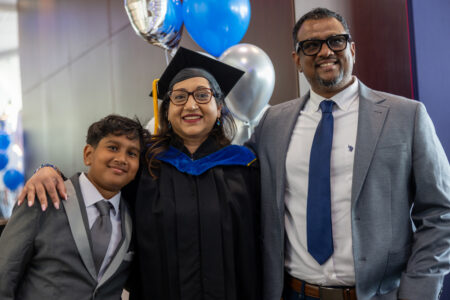
The M.Ed. not only fit into my life but also helped me become a better educator for my kids and my community.
Tricia Badal
Education Leader and Early Childhood Educator
Create Learning That Includes and Elevates Every Adult Learner
Develop expertise in how adult learning is designed, delivered, and evaluated across workplace, community, and post-secondary settings. Through applied coursework, you build the ability to assess needs, design effective programs, and measure outcomes that support real growth. Coursework connects theory to professional contexts, guided by educators with leadership experience in complex program design and evaluation. Graduate ready to lead learning initiatives, shape program strategy, and deliver education that unlock potential and support learners at every stage of life.
Duration
As Few as 20 Months*
*In a course-based pathway with full course load, year-round study and/or approved transfer credits. Contact an Admissions Advisor for more information.
Tuition
$26,700*
Cost per credit: $890
Total credits: 30
Application fee: $150
*Total program cost may be reduced when applying applicable transfer credits.
Campus
Online & Asynchronous
Starts
January, May, September
Your Program. Your Advantage.
Start Your Application
Start Your Application
Hear From Our Graduates




Admission Requirements
To Apply You Will Need
- Completed online application and $150 application fee
- Official undergraduate transcript and proof of a bachelor’s degree
- Resume and statement of interest
- Two academic or professional references
- At least two years of relevant experience in education or a related field
- Proof of English language proficiency for degrees completed in a language other than English with a TOEFL score of at least 95, IELTS overall score of 7.0, or equivalent on other recognized tests
Minimum Academic Requirement
You will need a cumulative grade point average (cGPA) of at least 3.0 on a 4.0 or 4.3 scale, or equivalent, based on your undergraduate studies or last 60 credits. Applicants with a GPA between 2.5 and 2.99 may be considered for provisional admission based on the strength of their overall application.
Flexible Admissions Pathways
If you do not meet standard admission requirements, you may still be considered based on extensive professional experience, typically over ten years, or demonstrated extenuating circumstances.
Course Descriptions
Start Your Application
Start Your Application
Program Description
The Master of Education in Adult Education (MEAE) program prepares students to become scholar practitioners. It does so by guiding students through broad and deep theoretical exposure while encouraging them to consider experiential knowledge. Fostering this development, the MEAE helps students learn how to work with a variety of stakeholders, including learners, colleagues, administrators, policy makers, and communities. The MEAE is grounded in rich adult education literature, critical dialogue, and reflexivity, and supplemented by extensive faculty expertise and experience.
Graduates of this program will be critically conscious and attentive to ethical, socially responsible, and sustainable practices. By design, the program encourages students to integrate theory and practice and to evaluate both with critical thought and reflexive awareness. The goal of the program is to prepare graduates to be practitioners who are aware of the symbiotic relationship between theory and practice and dedicated to ongoing professional development.
Required Courses
EDUC 6013
Research in Education
3 Credits
This course introduces students to a range of educational research methodologies, including quantitative, qualitative, mixed methods, arts-based, and community based participatory approaches. Emphasis is placed on understanding research terminology, evaluating published studies, and exploring data collection and analysis strategies for diverse research questions. Required in all M.Ed. program streams.
Prerequisites: Must be completed at Yorkville University
EDUC 6123
Reflexive Inquiry
3 Credits
This course introduces reflexive inquiry as a methodological framework to examine how lived experience, positionality, and reflexivity shape knowledge and relational engagement. Through critical reflection and dialogic exploration of binaries such as theory/practice and self/other, students cultivate social consciousness, accountability, and ongoing professional development.
EDUC 6083
Self-Directed Inquiry
3 Credits
This course is designed to be the culmination of the Master of Education journey for students in the course-based pathway. Students design and present a self-directed professional inquiry aligned with their area of interest and program designation. Emphasis is placed on critical and creative thinking, individualized expression, and the ability to conceptualize and communicate research effectively within the context of professional practice in education.
Prerequisites: Completion of first nine courses in course-based program streams
EDAE 6303
Contexts of Adult Learning
3 Credits
This course examines diverse contexts of adult learning, emphasizing the situational nature of education that influences learner success. Students explore formal, informal, and community-based learning environments, including communities of practice, experiential, networked, and place-based approaches. Theoretical frameworks include social learning, self-direction, and connectivism, with attention to learning in local, workplace, and online settings.
EDAE 6323
Foundations of Adult Education
3 Credits
This course explores the conceptual, historical, and philosophical foundations of adult education, emphasizing its societal purposes. Students examine the interplay between theory and practice, reflecting on their own perspectives and approaches in relation to foundational ideas that shape the field.
EDAE 6343
Program Development and Planning in Adult Education
3 Credits
This course introduces theoretical and conceptual frameworks for developing and planning adult education programs. Students examine approaches to program development, including needs assessment, learning objectives, instructional planning, and evaluation strategies, while applying these principles to the creation of educational programs.
EDAE 6363
Diversity in Adult Education
3 Credits
This course examines diversity as a social construction within diverse cultural contexts of adult education. Students explore concepts such as social identity, intersectionality, privilege, and power. Topics include race, ethnicity, gender, sexual orientation, Indigenous knowledge, inclusiveness, universal design for learning, and globalization as they relate to adult learning environments.
Electives
EDAE 6373
Learning and Teaching Online
3 Credits
This course examines the theoretical foundations of technology-based learning and teaching in adult education. Students explore instructional design, assessment strategies, and digital infrastructures, while critically engaging with concepts such as openness and generative tools for teaching and learning. Emphasis is placed on designing, implementing, and evaluating online learning environments within contemporary educational contexts.
EDAE 6383
Transformative Learning in Adult Education
3 Credits
This course explores the foundations and dimensions of transformative learning in adult education. Students examine its historical development, theoretical frameworks, research contributions, practical applications, and emerging perspectives, while distinguishing it from other learning approaches and considering how it can be fostered in educational practice.
EDAE 6513
Becoming a Critically Reflective Educator
3 Credits
This course examines diverse teaching and facilitation approaches that support adult learning in individual and group settings. Topics include teaching styles, motivational strategies, ethical considerations, method selection, technology integration, and performance assessment, with a focus on enhancing instructional effectiveness in adult education contexts.
EDAE 6523
Adult Education for Sustainability and Global Citizenship
3 Credits
This course explores the integration of sustainability and global citizenship within adult education. Students examine concepts such as affective and dialogic learning, inclusivity, and systemic thinking, while analyzing how sustainable development and global consciousness align with educational theory and practice across institutional and community contexts.
EDAE 6533
Coaching and Mentoring in Adult Education
3 Credits
This course examines coaching and mentoring within adult education, focusing on theoretical foundations and current models. Students explore strategies applicable to professional settings and reflect on approaches suited to their organizational contexts, with emphasis on supporting ongoing professional development through guided learning relationships.
EDEL 6113
Educational Leadership: Perspectives and Practices
3 Credits
This course introduces key theories of educational leadership and examines how they relate to current practices in administration and leadership. It emphasizes the connection between theoretical understanding and practical application, serving as a foundation for further study in the field.
EDEL 6143
Change and Transformation
3 Credits
This course examines approaches to managing personal, professional, and organizational change. It focuses on collaborative methods, interest-based strategies, and dynamic change theory, with attention to preventing fatigue associated with ongoing transformation.
EDEL 6153
Ethical Leadership
3 Credits
This course explores ethical leadership through critical pedagogy and ethics, emphasizing the role of education in developing intellectual awareness and a commitment to socially just practices.
EDEL 6173
Administrators as Leaders
3 Credits
This course focuses on leadership and management in educational settings, with emphasis on instructional leadership, shared vision development, and fostering cultures of continuous learning and professional growth.
EDEL 6193
Diversity and Leadership
3 Credits
This course examines diversity as a social construct in relation to identity and social location. Topics include intersectionality, privilege, race, ethnicity, gender, sexual orientation, multiculturalism, inclusiveness, universal design, globalization, and leadership.
EDEL 6223
Supervision of Instruction
3 Credits
This course introduces institutional contexts for instructional supervision and explores supervisory approaches that support professional development in educational settings.
EDEL 6433
Leadership and Community Engagement
3 Credits
This course explores the role of leadership in building meaningful connections within communities. It addresses the complexities of community involvement, the various forms it may take, and the relationship between leadership, critical reflection, and thoughtful practice in educational and nonprofit contexts.
EDEL 6453
Leadership in Higher Education
3 Credits
This course examines leadership across post-secondary environments, focusing on strategic planning, communication, collaboration, diversity, intellectual engagement, recruitment, retention, financial oversight, change leadership, and crisis management in the context of global and technological influences.
EDEL 6463
Leadership and Online Pedagogies
3 Credits
This course examines leadership in online education through the lens of K-12, higher education, and organizational learning and pedagogical theory. With an emphasis on innovation, accessibility, and inclusion, students explore strategic program development, evidence-based instructional design, emerging technologies, digital equity, policy, and data-informed change, preparing to guide educational teams through evolving online teaching environments.
EDCP 6443
Curriculum as Living Inquiry
3 Credits
This course introduces curriculum as a dynamic and relational process. Students examine concepts of self, self-in-relation, currere, and hidden curriculum to explore how lived experience informs curricular initiatives and program planning across diverse educational contexts.
EDCP 6613
Historic and Emerging Curriculum Perspectives
3 Credits
This course introduces the historical and emerging development of curriculum theories and practices through global and Canadian perspectives. Students examine curricular and pedagogical issues, challenges, and questions as they relate to diverse educational contexts and the broader purposes and meanings of education.
EDCP 6623
Pedagogy and Praxis
3 Credits
This course explores the relationship between pedagogy and praxis by examining how beliefs about teaching and learning are enacted in educational practice. Emphasis is placed on examining the various ways pedagogy informs praxis across diverse educational contexts.
EDCP 6633
Culturally Relevant Pedagogies and Curriculum
3 Credits
This course examines culturally relevant approaches to teaching and curriculum. It focuses on historical and ongoing forms of colonialism, marginalization, Indigenization, and decolonization, while addressing identity, intersectionality, privilege, race, ethnicity, gender, sexual orientation, and cultural knowledge systems.
EDCP 6653
Digital Pedagogies
3 Credits
This course examines how digital tools and processes influences pedagogical practices and supports learner engagement in both face-to-face and online learning environments. Through dialogic inquiry, students explore how to cultivate socially just education and inclusive design, while analyzing contemporary learning theories and pedagogies that support equitable, person-centered instructional approaches in K-12, higher education, and workplace training contexts.
EDCP 6673
Creativity in Teaching and Learning
3 Credits
This course explores the role of creativity in teaching and learning. Students experiment with theoretical and pedagogical practices that support creative engagement and examine strategies for sustaining personal creativity as part of ongoing professional development.
EDCP 6683
Curriculum Development Across the Professions
3 Credits
This course examines foundational, contemporary, and emerging approaches to curriculum development. Students learn to analyze how curriculum is applied across varied educational contexts by considering the needs of diverse learners and educators.
EDUC 6003
Indigenous Perspectives in Canadian Education
3 Credits
This course examines the traditional, historical, and contemporary contexts of Indigenous education in Canada. Emphasis is placed on the role of education and educators in advancing reconciliation and decolonization through critical engagement with Indigenous pedagogies, epistemologies, and methodologies.
EDUC 6043
Learning and Organizations
3 Credits
This course examines the emergence of the learning organization and its role in supporting collaboration, adaptability, and professional growth across individuals and teams. Emphasis is placed on how knowledge management and technology shape sustainable learning dynamics within organizational contexts.
EDUC 6063
Assessment and Evaluation in Education
3 Credits
This course introduces diagnostic, formative, and summative assessment methods. Students explore pedagogical strategies that support ethical interpretation, self-regulation, reflective practice, and knowledge curation. Emphasis is placed on differentiating assessment and evaluation principles for individual and program-level performance within educational contexts.
EDUC 6643
Decolonizing and Indigenizing Curriculum, Teaching, and Learning
3 Credits
This course examines colonial ideologies and pedagogical biases that affect Indigenous Ways of Being within educational systems. Students learn to develop curricula, programs, and services that integrate Indigenous knowledges, perspectives, values, and cultural understandings in pedagogy, policy, and daily practice.
EDUC 6703
Indigenous Pedagogies and Ways of Knowing
3 Credits
This course introduces Indigenous teaching and learning practices from the perspectives of Indigenous education, scholarship, and Indigenous Knowledge Holders. Through exploration of orality, storytelling, and Indigenous languages, Indigenous literature, and Indigenous arts, students explore alternative approaches to integrating Indigenous Ways of Knowing into instruction, evaluation, and assessment across diverse educational contexts.
EDUC 6713
Building and Strengthening Relationships in Indigenous Education
3 Credits
This course explores Indigenous education through Indigenous, settler, and immigrant perspectives. Guided by Indigenous principles and reconciliation frameworks, students examine decolonizing and Indigenizing approaches to creating ethical spaces of relationality and building respectful intercultural relationships within educational curricula, programming, and policy.
Elective offerings vary by term and enrolment.
From Applied Learning to
Leadership in Adult Education
Turn Coursework Into Professional Insight
Engage with application-focused coursework designed to deepen how you interpret, adapt, and respond to complex learning challenges, strengthening your judgment in designing and improving adult learning experiences.
- Work through complex, practice-based learning scenarios
- Examine how decisions shape learning effectiveness
- Learn from scholars and practitioners with field experience
Strengthen Professional Practice Through Evolving Contexts
Develop the perspective to guide learning in environments shaped by change, uncertainty, and emerging expectations, strengthening your ability to make informed decisions that influence programs, people, and outcomes.
- Explore how technology is reshaping learning environments
- Respond to shifting learner expectations and pathways
- Apply research to guide program and strategy decisions
Where Our Graduates Work


Frequently Asked Questions
Explore answers to common questions. If you don’t see what you’re looking for, connect with an Admissions Advisor for personalized support.
About the Program
Why should I choose the M.Ed. in Adult Education program?
This program helps you advance in teaching, training, and learning roles by building expertise in adult learning, program development, and evaluation. Delivered fully online, it allows you to apply learning immediately while continuing to work.
Is the M.Ed. in Adult Education program fully online?
Yes. The program is 100% online and asynchronous, allowing you to study on your own schedule while balancing professional and personal commitments.
How is this program different from other M.Ed. programs?
This program focuses specifically on adult learners across workplace, community, and post-secondary settings, with emphasis on program design and evaluation, theory, and applied learning in professional contexts.
Who is this program best suited for?
The program is ideal for educators, trainers, and professionals working in adult learning environments who want to deepen expertise and advance into more specialized teaching or leadership roles.
Can I complete the program while working full time?
Yes. The asynchronous format is designed for working professionals, allowing you to balance study with full-time employment.
How long does it take to complete the program?
Depending on the chosen pathway, the program can be completed in as few as 20 months with full-time, year-round study and/or approved transfer credits.
When can I start the program?
The program offers multiple intakes throughout the year, typically in January, May, and September.
What are the typical class demographics?
Most students are working professionals with experience in teaching, training, or program development. Small class sizes support discussion and peer learning.
Program Structure & Learning Experience
What is the difference between course-based and research-based pathways?
The course-based pathway focuses on applied professional practice, while the research-based pathway emphasizes advanced research skills and includes a thesis for those considering doctoral study.
How many courses will I take?
The program includes core and required courses along with electives. The course-based pathway typically includes more applied coursework, while the research-based pathway includes a thesis component.
What is the thesis requirement in the research-based pathway?
Students complete a graduate research thesis, conducting original research under faculty supervision, typically after meeting cGPA requirements for entry into the thesis stage.
Can I apply what I learn directly to my current role?
Yes. Coursework is designed to connect directly to workplace and community learning environments, allowing immediate application of concepts.
What teaching methods are used in the program?
You will learn through discussions, applied assignments, research projects, and case-based activities grounded in real adult learning environments.
Will I collaborate with other professionals?
Yes. You will engage with peers from diverse sectors, building insights through shared experiences and collaborative learning.
Who teaches the program?
Courses are taught by doctorate-level scholars and practitioners with experience in adult education, leadership, and program development.
Career Outcomes
What career paths does this program prepare me for?
Graduates may pursue roles such as Adult Educator, Corporate Trainer, Professional Learning Facilitator, Community Education Coordinator, Learning & Development Specialist, and Continuing Education Instructor.
Will this degree help me advance in my current role?
Yes. The program strengthens expertise in program design, evaluation, and adult learning, supporting career progression and expanded responsibilities.
Can this program support a career transition?
Yes. It is designed for professionals transitioning into education, training, or learning-focused roles without starting over.
What industries can I work in after graduation?
Graduates work across post-secondary education, corporate training, health-related fields, non-profit organizations, government, and community-based learning environments.
Admissions
What are the admission requirements?
Applicants must hold a recognized bachelor’s degree with a minimum cGPA of 3.0 (or equivalent), along with relevant professional experience.
What documents do I need to apply?
- Standard requirements typically include:
• Completed online application and $150 application fee
• Official undergraduate transcripts and proof of a bachelor’s degree
• Resume or curriculum vitae outlining relevant experience
• Statement of intent
• Two academic or professional references
Can I apply if my GPA is below 3.0?
Applicants with a GPA between 2.5 and 2.99 may be considered for provisional admission based on overall application strength.
Is work experience required?
Yes. Applicants are expected to have relevant experience in education, training, or related fields.
Is there a flexible admissions pathway?
Yes. Applicants with significant professional experience may be considered under flexible admissions, even if they do not meet standard academic requirements.
How do I apply to the program?
You can apply online by submitting your application, required documents, and fee. An Admissions Advisor can guide you through the process.
English Language Requirements
What IELTS or TOEFL score do I need to be accepted?
- Applicants must demonstrate English proficiency through one of the following:
• IELTS: Overall 7.0
• TOEFL (iBT): 95
• CAEL: 70 (no component below 60)
• Duolingo: 130 (no subscore below 120)
• PTE Academic: 65 (no section below 55)
• CLB: 9 (no component below 8)
Equivalent scores from other recognized tests at a CEFR C1 level may also be accepted.
Do I need to submit English test scores if I studied in English?
No. Applicants who completed a degree in English may be exempt from submitting test scores.
What if I don’t meet the English language requirements?
You may still be considered for admission depending on your overall profile. An Admissions Advisor can help determine available options.
Tuition & Financial Support
How much does the M.Ed. in Adult Education cost?
Please refer to the tuition page for the most current fees. Total program cost may be reduced through approved transfer credits.
Does Yorkville University offer scholarships or bursaries?
Yes. Financial support options may be available for eligible students.
Are payment plans available?
Flexible payment options may be available. Contact an Admissions Advisor for details.
Recognition & Student Support
Is Yorkville University approved to offer this degree?
Yes, Yorkville University’s Master of Education degree has been designated in New Brunswick by the Ministry of Post-Secondary Education, Training and Labour.
What support services are available to students?
Students have access to academic advising, writing support, library resources, digital learning platforms, and technical assistance throughout the program.
What if I have more questions?
If you cannot find your question on this page, you can contact an Admissions Advisor, who will be happy to help.
Latest News
View All
View All






Faculty
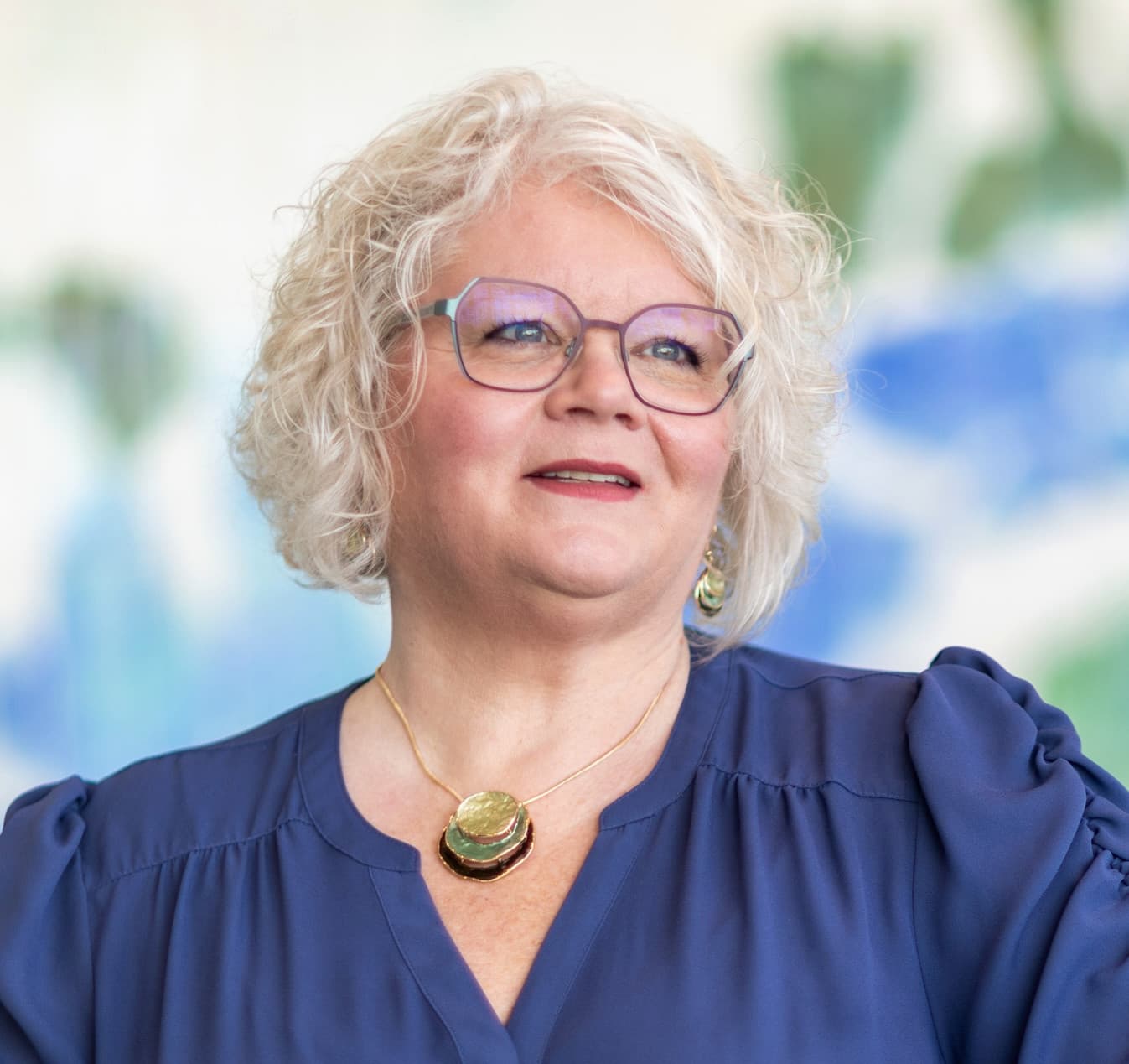
Meet the Dean
Wendy Kraglund-Gauthier is an accomplished educator, researcher, and academic leader with more than 30 years of experience spanning K–12 education, teacher education, post-secondary teaching, adult learning, curriculum development, and educational research. Since joining Yorkville University’s Faculty of Education in 2016, she has served in a range of academic and leadership roles, contributing to program development, research initiatives, and important campus and university-wide work.
Wendy brings an extensive record of scholarly publication, research funding, graduate supervision, and national and international presentations. Her interdisciplinary expertise, collaborative leadership, and commitment to educational quality and research-informed practice have made a significant contribution to the Faculty and the broader University community.
As Dean, Wendy is committed to cultivating a collaborative academic community that promotes student success, supports faculty and staff, and strengthens excellence in teaching, research, and learning. She will also continue to advance evidence-informed practice, meaningful partnerships, and accessible, culturally responsive education.