
Bachelor of Science in Nursing
Prepare to become a Registered Nurse (RN) through an accelerated, experiential education designed for modern nursing practice.

Advance Care Through Science, Compassion, and Confidence
Prepare for nursing practice in as few as 2.5 years as you build the clinical judgement and confidence to think critically, act with compassion, and navigate complex healthcare situations. Study through unique, eight-week MOD modules, completing your first year fully online before moving into in-person, hands-on practical learning. Explore the factors that influence health and illness, assess patient needs, and apply evidence to deliver care across the lifespan. Through simulation, laboratory learning, and 964 hours of practicum experience, prepare for the NCLEX-RN exam and a career where science, human connection, and impact come together.
Duration
As Few as 2.5 Years*
*With full course load, year-round study and/or approved transfer credits. Contact an Admissions Advisor for more information.
Tuition
$75,000*
Total credits: 120
Application fee: $30
*Total program cost may be reduced with applicable transfer credits.
Additional fees include a $100 Entrance Exam Fee and a $25 per credit Technology Fee, billed based on credits enrolled each semester.
Campus
Hybrid
Complete first 12 months online before transitioning into in-class learning at a campus in Sackville or Miramichi, New Brunswick
Starts
Every 8 Weeks
Starting September 8, 2026
Your Program. Your Advantage.
Start Your Application
Start Your Application
Approval and Professional Licensure
The Bachelor of Science in Nursing program holds preliminary approval from the College of Nursing of New Brunswick (CNNB). Upon graduation, you will be recognized as having completed an approved nursing program, making you eligible to apply for registration as a Registered Nurse (RN) across Canada and take your NCLEX-RN exam.
If your future career plans include becoming a registered nurse, it’s important to know that registration criteria for provincial regulatory bodies and professional associations vary. Be aware that the nursing profession is highly regulated, and that specific rules differ by jurisdiction and may change over time, although all provinces require applicants to complete a jurisprudence examination as part of the licensing process.
Admission Requirements
To Apply You Will Need
- Completed online application
- Official high school transcript
- $30 application fee
- A passing score on the Nursing Entrance Exam
- Responses to the Equity, Diversity, and Inclusion essay questions
Entrance Exam & Academic Standing
You’ll need a cumulative GPA of 2.5 and a passing score on the Nursing Entrance Exam, a test of vocabulary and reading comprehension. Priority is given to scores of 75% or higher.
English Language Requirements
Applicants whose degree was completed in a language other than English must submit proof of English proficiency, such as a TOEFL score of 85, an IELTS overall band of 6.5 (no score below 6.5), or a CAEL score of 60.
Course Descriptions
Start Your Application
Start Your Application
Program Description
The Bachelor of Science in Nursing degree program (BScN) educates professional nurses in order to meet the demands on nursing in today’s complex healthcare environment. The BScN graduates are valued for their abilities to think critically, demonstrate leadership, contribute to case management, engage in health promotion, and practice across a variety of healthcare settings. This program develops nurses in the generalist role in alignment with the entry-to-practice competencies for Registered Nurses (CNNB). Upon successful completion of the program, students can seek employment as a Nurse or clinical practice, administration, nursing education, and nursing leadership in a Nursing related field.
3 Credits
This course introduces the essentials of prose writing, generation of ideas, organization and the writing process. Grammatical accuracy, sentence structure and use of supporting details are stressed. Students practice these concepts first by reading and analyzing prose models and then by writing paragraphs and translating to longer essay themes of various lengths using the following strategies: narration, description, definition, process, divide and classify, cause and effect, compare and contrast, and argument. A written paper demonstrating proper referencing and documentation is also included.
Prerequisite(s): None
3 Credits
This course will introduce students to more in-depth academic writing genres incorporating narration, visual analysis, reviews and argument in a variety of academic publications. Students will continue to refine best practices regarding writing, learning to conduct literature reviews relevant to individual student disciplines, and become well-versed in the effective use of online databases, journals, and libraries. Students will effectively incorporate, and document primary and secondary sources formatted correctly with the APA style, while demonstrating higher levels of composition incorporating the writing process and all elements of successful writing across multiple academic disciplines.
Prerequisite(s): None
3 Credits
This course explores the major social and cultural trends, demographic and economic shifts, and international alliances, frictions, and conflicts that have characterized the Canadian experience from the beginning of Western Immigration. By tracking critical themes such as race, politics, technology, environment, and religion, students will learn to think historically, read critically, and model effective approaches to finding scholarly/other sources, writing, and civil engagement for a digital age. This course will also explore the historical foundations of Indigenous cultures in Canada such as Indigenous history, Residential Schools, the United Nations Declaration on the Right of Indigenous Peoples, Treaties, and Indigenous Rights. Through a critical analysis, students will explore the impact of events, policies and contemporary issues on Indigenous communities.
Prerequisite(s): None
4 Credits
This course focuses on core concepts necessary to understand the physiological aspects of disease and the approach necessary for the professional provider. This course also explores the pathophysiology of common disease states and integrates quality and safety approaches to the evaluation and treatment of the client. The student will address scientific principles essential to understanding alterations in body systems and will develop professional clinical decision making for health promotion, risk reduction, and disease management across the lifespan. The course provides a comprehensive approach to common alterations in body systems and addresses etiology, and clinical presentation of the disease process.
Prerequisite(s): ZO115, ZO116, ZO211
3 Credits
This course includes a study of the fundamental algebraic processes. Topics will include real and rational numbers, radicals, monomials and polynomials, solution of first- and second-degree equations, inequalities, systems of linear equations in two and three unknowns, graphing of functions in Cartesian Coordinates, logarithms, determinants, and word problems.
Prerequisite(s): None
4 Credits
This course studies the theory and application of statistics. Estimation will be conducted using properties of sufficient statistics and maximum likelihood estimators. Hypothesis tests will be developed for population means, proportions, chi-square tests of independence, as well as regression and ANOVA. Statistical hypothesis testing will be applied to real-world data sets using technology.
Prerequisite(s): MS110
3 Credits
This course is designed to assist the student in gaining a general, foundational knowledge of human development across the lifespan with an emphasis on mental health and wellbeing. The student will look closely at the three spheres of development essential to this process: physical, cognitive, and social, and how they intersect with mental well-being. Students will draw from their own experiences as well as be introduced to the most current understanding and literature regarding development with a particular focus on the psychosocial and emotional aspects of human growth and mental health.
Prerequisite(s): None
3 Credits
This course introduces the student to the study of society and the interaction of individuals within a society. Major areas of study include the concepts and theory of sociology, culture, social structure and social change and their relevance to mental health. Students will explore how sociological factors influence individual and collective mental health, providing a comprehensive understanding of the complex interplay between society and psychological wellbeing.
Prerequisite(s): None
4 Credits
In this course, basic bio-organization and six areas of the body structural systems are studied. The gross and microscopic structures and function of integumentary system, skeletal system, muscular system, nervous system, endocrine system and special senses are explored. Emphasis is placed on the diseases and diagnostic procedures related to each of these systems. This course involves both lecture and lab components.
Prerequisite(s): None
4 Credits
The gross and microscopic structures and function of the blood, the male and female reproductive systems, cardiovascular system, lymphatic system, respiratory system, digestive system, and urinary system are explored. Emphasis is placed on the diseases and diagnostic procedures related to each system. This course involves both lecture and lab components.
Prerequisite(s):: None
4 Credits
This course uses biological principles to help the student understand microorganisms as they relate to health sciences. Learning is focused on metabolism, the environment, and the genetics of microorganisms. Topics include the body’s response to microorganisms, disease, and the body’s defense mechanisms, the infection cycle, and transmission from host to host. Chemistry is integrated for understanding the enzymatic functions and microbial physiology. This course includes a laboratory which explores the physiological, nutritional, and environmental needs of bacteria and fungi. Sterilization techniques, the use of the microscope, and the antibiotic susceptibility of bacteria are also studied. Laboratory activities include cultivation techniques, microscopy, biochemical assays, immunoassays and identification. This course involves both lecture and lab components.
Prerequisite(s): ZO115, ZO116
4 Credits
This course prepares the student with a general knowledge of gene structure and the human genome’s organization and function. The topics will explore the structure and function of genes, chromosomes and genomes, biological variation resulting from recombination, mutation, and selection, population genetics, and use of genetic methods to analyze protein function, gene regulation and inherited diseases.
Prerequisite(s): ZO211
From Simulation to Clinical Confidence
Guided Practice Before Patient Care
Practice clinical skills in hands-on healthcare scenarios designed to build lasting competence. Repeat procedures with faculty support until they become second nature, so you’re ready for patients.
- High-fidelity adult, pediatric, maternity, and emergency simulation suites
- Real-time faculty guidance and feedback throughout VR and lab sessions
A Practicum That Shapes Future Nurses
Step into direct patient care across hospital, community, and specialty settings. Work alongside experienced RNs, take on real responsibility, and experience what it means to practice as a nurse.
- 964 hours of clinical practicum across hospital, community, and specialty settings
- 190-hour preceptorship under the direct supervision of a Registered Nurse
Meet the Dean
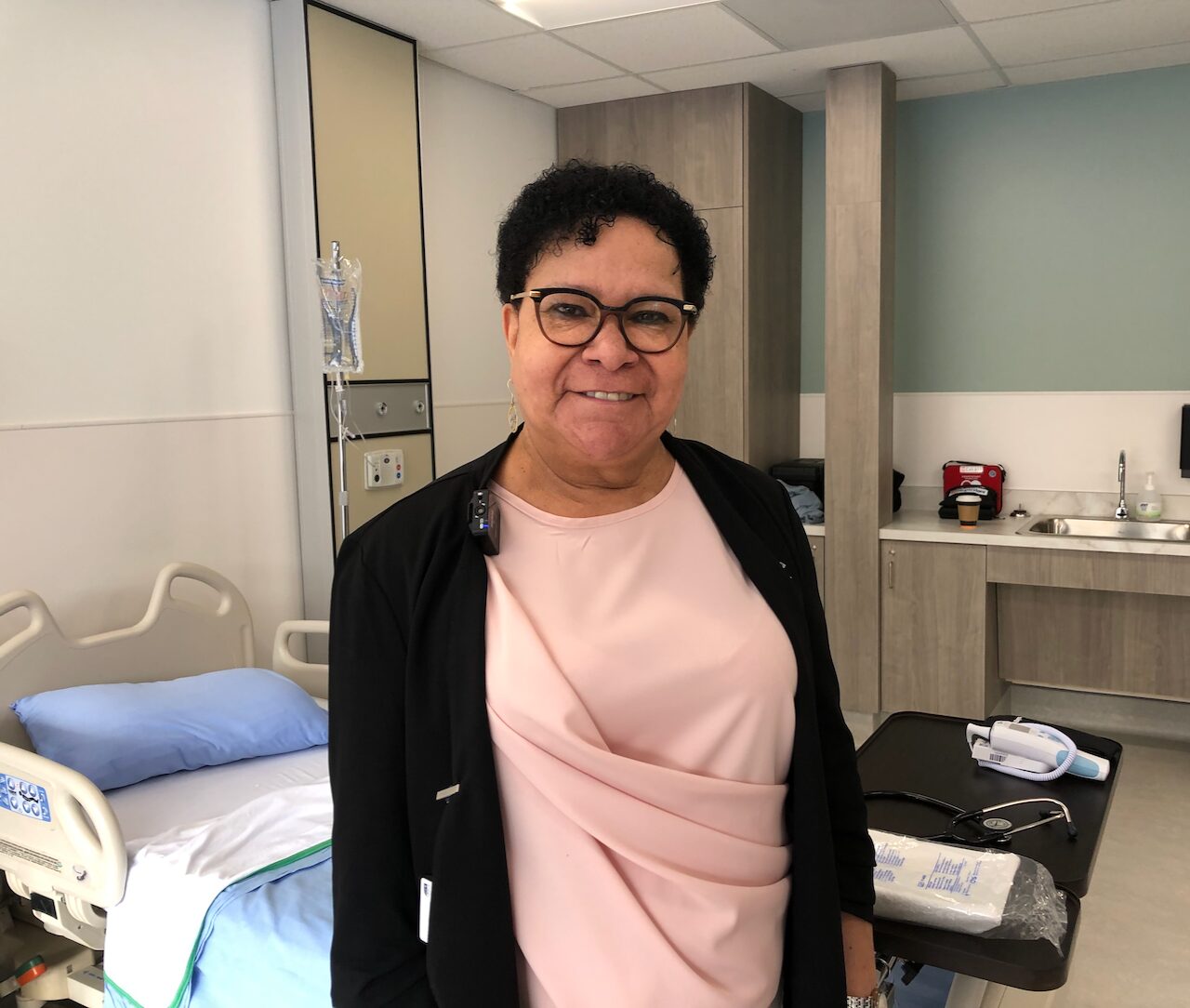
Dr. Jessie Johnson brings over 25 years of experience across clinical nursing, leadership, higher education, and international nursing education. She holds a PhD, with research focused on interdisciplinary decision-making in stroke care.
Her research also explores palliative care, vaccine hesitancy, and health literacy, advancing evidence-informed practice and patient outcomes. She is passionate about developing future nurse leaders equipped to deliver high-quality, collaborative care in diverse healthcare settings.
Frequently Asked Questions
Explore answers to common questions. If you don’t see what you’re looking for, connect with an Admissions Advisor for personalized support.
About the Program
What is the Bachelor of Science in Nursing program?
The Bachelor of Science in Nursing prepares future Registered Nurses (RN) through an accelerated, experiential education that combines health sciences, evidence-informed nursing practice, immersive learning, and extensive clinical experience. Graduates are prepared to pursue RN registration and build careers across a wide range of healthcare settings.
What makes the BScN program different from other nursing programs?
The program combines an accelerated 2.5-year pathway with immersive learning, simulation, virtual reality, dedicated nursing laboratories, and 964 hours of clinical education. Students graduate with extensive real-world experience and the knowledge, judgement, and professional competencies required for entry-to-practice nursing.
What is the difference between a BScN and other nursing pathways?
A Bachelor of Science in Nursing (BScN) prepares graduates for entry-to-practice as a Registered Nurse (RN) through university-level health science education, evidence-informed practice, and extensive clinical training. This path is unlike diploma or Licensed Practical Nurse (LPN) programs, which typically involve a narrower scope of practice and less clinical depth. Yorkville University’s BScN combines this university-level foundation with an accelerated, year-round schedule, allowing students to complete the equivalent of a four-year nursing degree in as few as 2.5 years without sacrificing the 964 hours of clinical education or academic rigour required for RN registration. An Admissions Advisor can help you understand how this pathway compares to your specific education and career goals.
Where is the program offered?
The online component can be taken anywhere. The on-campus component must be taken in Sackville or Miramichi in New Brunswick.
Is the program accelerated?
Yes. Students can complete the equivalent of a four-year nursing degree in as few as 2.5 years through continuous, year-round study.
When can I start the program?
Our Bachelor of Science in Nursing has intakes every 8 weeks. Please contact an Admissions Advisor to find out more.
Is the program approved for RN registration?
The Bachelor of Science in Nursing holds preliminary approval from the College of Nurses of New Brunswick (CNNB). Graduates are recognized as having completed an approved nursing program, making them eligible to apply for registration as a Registered Nurse and write the NCLEX-RN.
What does preliminary approval mean?
Preliminary approval confirms the program meets the requirements to educate future Registered Nurses while completing the final approval process. Yorkville University has submitted its comprehensive review to the College of Nurses of New Brunswick and is confident the program will receive full approval following the successful completion of the review process.
Can I become a Registered Nurse anywhere in Canada after graduation?
Yes. After graduating, you can seek registration with the nursing regulatory body in the Canadian province or territory where you plan to practise apply to write the NCLEX-RN. Registration requirements vary by jurisdiction and may change over time. While all Canadian nursing regulators require applicants to complete a jurisprudence examination, prospective students are encouraged to review the registration requirements of the province or territory where they intend to practise.
How long does the program take to complete?
Students can complete the program in as few as 2.5 years through continuous, year-round study.
How does the MOD learning model work?
Instead of traditional semesters, the program is delivered through six eight-week MODs each year. Full-time students typically take two courses per MOD, allowing you to focus on fewer subjects while completing the same academic credits each year.
Learning Experience
Is the program online or on campus?
The program begins with a strong online foundation for up to the first 12 months before transitioning into increasingly hands-on learning. As you progress, coursework combines in-class laboratories, simulation, applied theory, and clinical education.
What is the hybrid learning experience like?
The program combines online learning with immersive, in-person experiences. Through laboratory instruction, simulation, virtual reality, and supervised clinical placements, you will apply your knowledge in realistic healthcare environments while building confidence before working directly with patients.
What will I learn?
You will develop the scientific knowledge, clinical judgement, and professional expertise required for nursing practice. Throughout the program, you will learn to assess patient needs, make evidence-informed clinical decisions, promote health across the lifespan, collaborate within healthcare teams, and provide safe, patient-centred care.
How will I build practical nursing skills?
Practical learning is integrated throughout the program. You will apply classroom learning through laboratory instruction, simulation, virtual reality, and supervised clinical experiences that develop the confidence and competencies required for entry-to-practice nursing.
What immersive learning experiences are included?
The program incorporates high-fidelity simulation suites, virtual reality learning, dedicated nursing laboratories, case studies, and progressive clinical experiences that allow you to apply theory before providing care in clinical settings.
What kinds of nursing skills will I develop?
You will build competency in health assessment, medication administration, IV therapy, blood collection, CPR, NG tube insertion, aseptic technique, therapeutic communication, patient assessment, and clinical decision-making.
Clinical Experience
How much clinical experience will I complete?
You will complete 964 hours of clinical education throughout the program, including a 190-hour preceptorship supervised by an experienced Registered Nurse.
What kinds of clinical placements will I complete?
Clinical education includes experience across long-term care, acute medical and surgical units, obstetrics and maternity, mental health, community care, leadership practicum, and preceptorship experiences, providing exposure to a broad range of nursing practice environments.
Where will I complete my clinical placements?
Clinical placements take place across Horizon Health, Vitalité Health, approved long-term care facilities, and other healthcare organizations throughout New Brunswick.
Can I choose my clinical placements?
Clinical placements are coordinated by the University’s Clinical Placement and Lab Coordinator. Whenever possible, placements are arranged to align with students’ preferred areas of specialty while ensuring all program learning outcomes are achieved.
Can I arrange my own clinical placement?
No. All clinical placements are coordinated by the University. Students may not contact healthcare organizations, employees, or potential preceptors directly or arrange placements independently.
Will I need to travel for clinical placements?
Possibly. Clinical placements are assigned throughout the province, and students should expect that travel of up to approximately 1.5 hours may be required for some placements.
What is a nursing preceptorship?
The program includes a 190-hour preceptorship completed under the direct supervision of an experienced Registered Nurse. This immersive experience allows you to consolidate your knowledge, strengthen your clinical judgement, and prepare for independent professional practice.
What makes the clinical experience different?
In addition to completing placements across diverse healthcare settings, you will gain experience working both 8-hour and 12-hour clinical shifts that reflect the realities of modern nursing practice. This helps build time management, adaptability, clinical judgement, and confidence before entering the profession.
What requirements must I meet before starting clinical placements?
Before participating in clinical education, you will need to meet all program and placement requirements. These include academic standing, required immunizations, Basic Life Support (CPR) certification, criminal record and vulnerable sector checks, and any additional health or documentation requirements established by the University or clinical partners.
What immunizations and certifications are required for clinical placements?
Students must complete all required clinical health and safety requirements before attending clinical placements. These include required immunizations, tuberculosis screening, current Basic Life Support (CPR) certification, and annual criminal record and vulnerable sector checks. Requirements may change based on clinical partner or regulatory requirements.
What are my responsibilities during clinical placements?
Students are expected to attend all scheduled clinical hours, participate actively in learning, demonstrate professionalism, follow clinical policies, seek opportunities to develop their skills, ask questions, and ensure all placement requirements are completed before beginning clinical education.
How does the program prepare me for the NCLEX-RN?
The curriculum integrates health sciences, nursing theory, simulation, laboratory learning, and extensive clinical education to develop the knowledge, clinical judgement, and entry-to-practice competencies required for the NCLEX-RN examination.
Careers
What career opportunities can this program prepare me for?
Graduates are prepared to pursue Registered Nurse opportunities across hospitals, community health, long-term care, rehabilitation, mental health, public health, and many other healthcare settings.
What is the expected salary for a Registered Nurse in Canada?
The salary of a Registered Nurse ranges from province to province. You can see estimates in the program information above.
Can I specialize after becoming a Registered Nurse?
Yes. A Bachelor of Science in Nursing provides a strong foundation for future specialization, leadership opportunities, graduate education, nursing education, and advanced nursing practice.
Why choose an accelerated nursing program?
An accelerated program allows you to complete your degree sooner while meeting the same academic requirements as a traditional four-year program. Combined with immersive learning and extensive clinical education, you will graduate prepared to enter professional nursing practice earlier.
What makes graduates career-ready?
Throughout the program, you will develop clinical judgement, communication, leadership, collaboration, ethical practice, and evidence-informed decision-making while gaining extensive real-world clinical experience. Together, these experiences prepare you to transition confidently into professional nursing practice.
Admissions
What are the admission requirements?
To apply, you will need:
- A completed online application
- Official high school transcripts
- A $30 CAD application fee
- A passing score on the Nursing Entrance Exam
- Responses to the Equity, Diversity, and Inclusion essay questions
Admission requirements are subject to change. Refer to the Admissions section of the program page for the latest information.
What are the academic requirements for admission?
Applicants require a minimum cumulative GPA of 2.5 and a passing score on the Nursing Entrance Exam, which assesses vocabulary and reading comprehension. Priority consideration is given to applicants who achieve a score of 75% or higher.
Do I need to meet English language requirements?
Applicants whose previous education was completed in a language other than English must demonstrate English language proficiency. Accepted tests include:
- TOEFL: Minimum score of 85
- IELTS Academic: Overall band score of 6.5, with no band below 6.5
- CAEL: Minimum score of 60
Refer to the Admissions section for the latest English language requirements.
Can I apply if I already have a degree in another field?
Yes. The program is designed for learners from a variety of educational and professional backgrounds, including those who already hold a degree in an unrelated field, and does not require previous healthcare experience. Applicants are assessed against the standard admission requirements regardless of their prior field of study. If you have completed post-secondary coursework, you may also be eligible for transfer credit, which could reduce the time needed to complete the program. An Admissions Advisor can review your transcript and confirm your eligibility.
Can I receive transfer credit?
Eligible transfer credits may reduce the time required to complete the program. If transfer credit is awarded, the amount of time spent studying online before transitioning to in-person learning may also be reduced. An Admissions Advisor can review your previous education and determine your eligibility.
Do I need previous healthcare experience?
No. The program is designed for learners entering nursing from a variety of educational and professional backgrounds.
Tuition & Financial Support
How much does the program cost?
Tuition and fees are outlined on the Tuition & Fees section of the program page. An Admissions Advisor can also help you understand your tuition estimate.
Are bursaries or financial aid available?
Eligible students may qualify for bursaries, scholarships, student loans, or other financial assistance. Speak with an Admissions Advisor to explore the funding options available to you.
Student Support
What support is available throughout the program?
From your first course through graduation, you will have access to faculty, academic advising, student services, and technical support to help you succeed throughout your nursing education.
Will I receive support during clinical placements?
Yes. Throughout your clinical education, you will receive guidance from clinical instructors, preceptors, and faculty members who provide mentorship, feedback, and support as you develop your clinical skills and professional confidence.
Who arranges clinical placements?
The University’s Clinical Placement and Lab Coordinator coordinates all clinical placements and works closely with healthcare partners to ensure students complete the required clinical experiences.
What if I have more questions?
If you cannot find your question on this page, you can contact an Admissions Advisor, who will be happy to help.
Latest News
View All
View All






Faculty
Meet the Dean
Dr. Jessie Johnson brings over 25 years of experience across clinical nursing, leadership, higher education, and international nursing education. She holds a PhD, with research focused on interdisciplinary decision-making in stroke care.
Her research also explores palliative care, vaccine hesitancy, and health literacy, advancing evidence-informed practice and patient outcomes. She is passionate about developing future nurse leaders equipped to deliver high-quality, collaborative care in diverse healthcare settings.