


Master of Education in Adult Education (Online)
Making a Difference With Education
The power of education meets the passion for making a difference at our Master of Education in Adult Education.
Tailored for those engaged in adult education, including post-secondary education administration, this online degree propels you to become an expert in adult learning.
Our comprehensive program goes beyond theory, encouraging you to critically reflect on personal experiences to bridge the gap between theory and practice.
By fostering a deep understanding of adult education principles, we equip you with the tools to address real-world challenges.
Emerge not only as experts in adult learning theory and practice, but also as reflective practitioners capable of making meaningful contributions to the field and the growth of adult learners.


18
Students per class
3
Start dates per year
New Term Starts Soon
Starts:
January, May, September
Campus:
Fully Online
Duration:
As few as 2 years*
*With full course load, year-round study and/or approved transfer credits. Contact an Admissions Advisor for more information.
Program Benefits

We recognize the diverse aspirations of our students and offer two pathways: course-based for those focused on professional learning outcomes and research-based for passionate researchers and doctoral candidates. To make the program truly individualized, students can take any of our M.Ed. elective courses, irrespective of their chosen specialization.

Our standard-setting curriculum is developed and managed by a robust team of credentialed faculty, Curriculum Committee, and instructional design specialists. This helps maximize the effectiveness and real-world applicability of our program.

We’ve assembled a team where every faculty member not only has a doctorate credential but also rich experience of working in the field. This helps up deliver a program that creates a theory-practice synergy and equips you with skills that have real-world applicability.

Being consistently featured as a top online Canadian university is a testament to our dedication towards online education. Over the years, we’ve built flexible programs that you can complete while working, accelerate or extend your program duration, and start the program as soon as you are ready with our multiple start dates.
Career Outcomes
Graduates of the Master of Education in Adult Education program apply their new skills and knowledge to help adults achieve their lifelong learning goals and transform their lives.
A variety of exciting and fulfilling outcomes are available to graduates of this program, in settings such as:
Universities
Colleges
Polytechnic Institutions
Armed Forces
Training Departments
Social Work
Emergency Response
Organizational Development
Human Resources
Faculty
Meet the Dean

Tim Goddard
M.S.M., Ph.D. Interim Dean
Professor Goddard is the Interim Dean of the Faculty of Education at Yorkville University. He has extensive expertise in university administration and governance, including Vice Provost (International) at the University of Calgary and Dean of Education at UPEI. He served on the Board of Directors of both the Federation for the Humanities and Social Sciences and the Canadian Society for the Study of Education, and was president of the Canadian Association for the Study of Educational Administration.
Meet the Faculty
Sepideh Mahani, Ph.D.
Associate Dean (Education) & Chair of Education Leadership

Wendy Kraglund-Gauthier, Ph.D.
Associate Dean (Research) & Chair of Adult Education

Jeeyeon Ryu, Ph.D.
Interim Associate Dean (General Education)

Adwoa Onuora, Ph.D.
Faculty Member

Angel Davila, Ph.D.
Faculty Member
Barbara Elliott, Ph.D
Faculty Member

Bernard Potvin, Ph.D.
Faculty Member

Deb Clendinneng, Ph.D.
Faculty Member

Debbie McCleary, Ph.D.
Faculty Member

Diane Burt, Ed.D.
Faculty Member

Doris MacKinnon, Ph.D.
Faculty Member

Gabrielle Hughes, Ph.D.
Faculty Member

Georgann Cope Watson, Ph.D.
Faculty Member

Jennifer Long, Ph.D.
Faculty Member

Joanie Crandall, Ph.D.
Faculty Member

Joy Kcenia Polanco O’Neil, Ph.D.
Faculty Member

Kathryn Crawford, Ed.D
Faculty Member

Katie Maxwell, EdD
Faculty Member

Kimberly Holmes, Ph.D.
Faculty Member

Linda Rappel, Ed.D.
Faculty Member

Lois Edge, Ph.D.
Faculty Member

Lorraine Godden, Ph.D.
Faculty Member

Mary Drinkwater, Ph.D.
Faculty Member

Nagwa Megahed, Ph.D.
Faculty Member

Natalie Davey, Ph.D.
Faculty Member

Paul Kolenick, Ed.D.
Faculty Member

Rita Kop, Ph.D.
Faculty Member

Rupert Collister, Ph.D.
Faculty Member

Shannon Leddy, Ph.D.
Faculty Member

Steven Noble, Ph.D.
Faculty Member

Susan Elizabeth Elliott-Johns, Ph.D.
Faculty Member

Admission Requirements
Yorkville University’s Master of Education program is 100 percent online.
The Master of Education online degree is administratively offered by our Fredericton campus.
Applicants to the Master of Education program are required to provide the following:
- Official undergraduate transcript and proof of obtainment of a bachelor’s degree*
- Resume and statement of interest
- Detailed course descriptions if applying for transfer credits
- Two letters of reference from professional or academic sources
- Completed online application
- Application fee of $150 (CAD)
*All official transcripts need to be sealed, stamped and sent directly from the issuing institution to our Admissions Services Department for evaluation.
In addition, applicants are required to have:
- A cumulative grade point average (CGPA) in undergraduate study of at least 3.0 on a 4.0 or 4.3 scale, or a GPA of at least 3.0 on the final 60 undergraduate credits taken. Applicants may be conditionally admitted with a GPA between 2.5 and 2.99 if strength of overall application is sufficient.
- Two or more years of relevant employment in education or an education-related field. In some cases, relevant volunteering work in community-based activities may be considered. Preference will be given to applicants with an undergraduate degree in education or a field related to their field of study.
Applicants who do not meet the standard admissions requirements may be considered for admission under the Faculty of Education’s Flexible Admissions Policy. Yorkville University reserves the right to refuse admission or ask admitted students to withdraw from the program in special circumstances.
For full details of admissions requirements, please contact an Admissions Advisor.
To fill out the details of your reference for admission to our Master of Education in Adult Education degree, click here.
English Language Requirements
English is the primary language of instruction at Yorkville University.
Applicants whose native language is not English and who have obtained a bachelor’s degree in a language of instruction other than English must prove proficiency in one of the following ways:
- Proof of obtaining a bachelor’s or first professional degree where English is the language of instruction.
- Confirmation of a Canadian Academic English Language – Computer edition (CAEL-CE) score of at least 70.
- Confirmation of an official Test of English as a Foreign Language (TOEFL) score of 92 (Internet-based version).
- Confirmation of a Canadian Language Benchmark (CLB) overall score of 8 with no component below 8.
- Confirmation of an International English Language Test System (IELTS) overall band score of at least 7.0 with no band below 6.5.
- Confirmation of a Canadian Test of English for Scholars and Trainees (CanTest) with a minimum overall bandwidth of 4.5.
- Confirmation of a score on any other test of English language proficiency that equates to Level C1 or higher of the Common European Framework of Reference for Languages (CEFR).
- Confirmation of a score equivalent to these scores on another test of English language proficiency recognized by and acceptable to the University.
- Confirmation of a Duolingo minimum score of 115.
- Confirmation of Pearson Test of English (PTE) Academic score of 65
Canadian applicants who completed their qualifying bachelor’s degree in French, but completed another post-secondary degree, certificate, or diploma or their secondary education in English, are exempted from the requirement to provide tested confirmation of English language proficiency.
The University reserves the right to refuse admission to any student whose proficiency of English is questionable and to ask any student whose written work is below acceptable standards to withdraw from the program.
Have any questions? Please contact an Admissions Advisor.
Tuition and Fees
Total Cost (including Application and Seat Fees) is $24,750*
*Note: Total program cost may be reduced when applying applicable transfer credits. Costs below assumes full program cost without applicable transfer credits applied. The cost does not include textbooks, expendable supplies, equipment, and resource fees. To understand your specific program cost, please speak with an advisor.
- M.Ed. Tuition: $24,600
- Cost per credit: $820
- Program cost includes $300 seat fee and $150 application fee
- $300 Seat Fee is deducted from Student’s first tuition payment
- Total program tuition may vary based on actual credit transfers and course equivalencies.
Assuming an average course load, tuition cost per term is $4,920
By selecting to take more or fewer courses per term, costs will be updated accordingly.
A typical course is 3 credits. Students must complete 30 study credits to graduate.
Term
Credits
Cost Per Credit
Fees
01
6
$820
$4,920
02
6
$820
$4,920
03
6
$820
$4,920
04
6
$820
$4,920
05
6
$820
$4,920
TOTAL
30
$820
$24,600
*As of September 2023. Please note that tuition and fees are subject to change.
Tuition Payment and Rate Information
Changes to tuition rates will be announced at least three months before the start of the term to which they apply.
Arrangements for payment of tuition must be made at least two weeks before the start of each term (please see the Academic Schedule for deadlines). Monthly payment arrangements can also be made.
For further information about tuition, fees and payment methods, please contact Yorkville University’s Bursar’s Office at 1-888-886-1882.
Please contact an Admissions Advisor to learn more about financial aid options.
Course Descriptions
The rigorous curriculum of the Master of Education in Adult Education includes the following courses:
EDAE6303 | Contexts of Adult Learning
3 Credits (required)
Contexts of Adult Learning introduces students to the contexts of adult education and investigates what it means to be learning in a number of different contexts. The situational aspect of learning will be central to the enquiry and students will take a close look at formal and informal learning, networked learning, experience and game-based learning, community-based learning, learning in communities of practice, and learning in communities of interests. These learning contexts will lead students not only to social movement theory, with a particular focus on the local community, the workplace, the home, the voluntary sector, but also to theories of self-direction and connectivism as might be most obvious in relatively new online learning spaces. Students will explore how the learning and knowledge-generating capacities of such spaces will affect their success.
EDAE6323 | Foundations of Adult Education
3 Credits (required)
Foundations of Adult Education presents an overview of the major societal purposes of adult education by exploring and examining the conceptual, historical, and philosophical foundations that inform current practices in the field. Students are encouraged to examine the relationship between theory and practice, and to identify their own ideas and practices in relation to these theories and practices.
EDAE6343 | Program Development and Planning
3 Credits (elective)
Program Development and Planning provides a theoretical and conceptual foundation in contemporary approaches to program development and planning for adult learners. Students apply newly‐acquired knowledge and skills in designing a program. Topics include: designing and developing programs; assessing needs; setting learning objectives and outcomes; designing instructional plans; and developing evaluation strategies.
EDAE6363 | Diversity in Adult Education
3 Credits (required)
Diversity in Adult Education addresses how adult education programs understand and respond to different cultural contexts. Through selected readings, weekly discussions, and assignments, students will develop a greater understanding of diversity as a social construction in relation to the concepts of social identity and social location. The specific areas of diversity included in this course are: Identity and Intersectionality; Privilege and Power; Race and Ethnicity; Gender and Sexual Orientation; Indigenous Knowledge; Inclusiveness and Universal Design for Learning; and Globalization and Adult Learning.
EDAE6373 | Learning and Teaching Online
3 Credits (elective)
Learning and Teaching Online explores the theory underlying the development and application of new interactive educational technologies, how they might fit with instructional design, learning and assessment strategies, and infrastructures. The course provides hands-on experience with a range of learning technologies and enables students to explore the processes of designing, implementing, and critiquing technology-based learning. The course will introduce students to current debates around the concept of openness. By the end of the course, students will have developed the ability to act as creative and critical professionals within the broad field of technology-based learning, teaching, and training.
EDAE6383 | Transformative Learning in Adult Education
3 Credits (elective)
Transformative Learning in Adult Education involves an examination of transformative learning. This course will help students to understand what transformative learning is, distinguish it from other forms of learning, and foster it in their practice. The course will cover five broad areas: history; theory; research; practice; and future perspectives of transformative learning.
EDAE6513 | Becoming a Critically Reflective Educator
3 Credits (elective)
This course involves the examination of a variety of teaching and facilitating approaches that enhance the adult learning experience in individual or group settings. Topics include: teaching styles; creating motivating learning environments; ethical concerns in teaching adults; guidelines for selecting teaching methods; the use of technologies for teaching; and the assessment of teaching performance.
EDAE6523 | Adult Education for Sustainability and Global Citizenship
3 Credits (elective)
Adult Education for Sustainable Development and Global Citizenship is designed to provide students with the knowledge and skills to integrate with depth and creativity the principles of sustainability and global consciousness into classrooms, colleges, community contexts. Students will explore sustainable development and global citizenship to understand their alignment with adult education theory and practice, in particular affective and dialogic learning, inclusivity, and systemic thinking.
EDAE6533 | Coaching and Mentoring in Adult Education
3 Credits (elective)
Coaching and Mentoring in Adult Education will introduce students to coaching and mentoring strategies that they can utilise in their workplaces. Students will learn about the underlying theory as well as explore current models. They will also be encouraged to reflect on what coaching and mentoring strategies may work best for them and their organisation. This course will aid students in helping others toward continuous professional development.
EDUC6003 | Indigenous Perspectives in Canadian Education
3 Credits (elective)
Indigenous Perspectives in Canadian Education introduces students to the history of Indigenous education in Canada, Indigenous pedagogies and epistemologies, decolonization in education, while encouraging students to think about their own roles in reconciliation through the lens of education. Through selected readings, weekly discussions, and assignments, students will develop a greater understanding of the traditional, historical, and contemporary roles of education in the lives of Indigenous peoples in Canada. Because the course readings include studies that draw upon Indigenous or Indigenous-informed methodologies, students will also be introduced to some ways that Indigenous methodologies are used in educational research.
EDUC6013 | Research in Education
3 Credits (core)
Research in Education familiarizes students with methods of educational research. Its primary focus is to help them understand both quantitative and qualitative research and to acquire the knowledge and skills necessary to read, understand, and critically evaluate published research. Mixed methods and critical approaches are also explored. Research methods, information gathering strategies, and analysis procedures are examined. Students will begin to think about possible topics for their capstone projects.
EDUC6043 | Learning and Organizations
3 Credits (elective)
Learning and Organizations provides an opportunity for students to examine the emergence of the learning organization and explore ways to build sustainable learning dynamics and foster spaces where people flourish. Attention will be given to the ways knowledge management and technology help organizations become learning organizations.
EDUC6063 | Assessment and Evaluation in Education
3 Credits (elective)
Assessment and Evaluation in Education allows students to explore various diagnostic, formative, and summative methods from both theoretical and practical perspectives. Students will learn how to develop and use assessment to promote student learning within a positive knowledge-curation culture (i.e., classroom, department, working unit, etc.). A focus on how to build efficacious and self-regulated learners through pedagogical assessment strategies that utilize accurate and ethical interpretation will be a focus. Students will also explore and differentiate between assessment and evaluation principles for both individual and program performance. A final culminating learning experience will be to reflect upon an assessment and evaluation architecture that aligns to an area of professional interest.
EDUC6083 | Self-Directed Inquiry
Self-Directed Inquiry is designed to be the culmination of the Master of Education journey for students in the course-based pathway. It requires students to explore a specific area of research interest relevant to their field and to the designation that they are seeking. With the support of teaching faculty and each other, students will engage in discussions and assignments that support self-directed professional inquiry and their own professional learning. As such, students will focus equally on the demonstration of two competencies: conceptualizing, designing, and presenting a research inquiry that evidences criticality and creativity, individualized expression, and capacity to inform praxis; and the ability to communicate effectively at a level commensurate with graduate education.
EDUC6093 | Advanced Research Methods in Education
Advanced Research Methods in Education encourages students to explore the broad and deep possibilities for inquiry within critical, community-based, arts-integrated, qualitative, and quantitative research. Connecting rigour to researcher consciousness through reflexive inquiry, students will begin to think about situating themselves theoretically (ontologically, epistemologically, and methodologically) in the context of potential research topics of interest. Engaging with scholarly discourse and critical dialogue, students will extend their capacities from evaluating published research to preparing to conceptualize, conduct, and analyze their own research.
EDUC6123 | Reflexive Inquiry
3 Credits (core)
Reflexive Inquiry provides students with grounding in critical reflexive practices that are integral to ongoing self- directed professional development. Honouring foundational principles of leadership and learning, this course centres on the intersection and dynamic relationship between theory and practice.
EDAE6303 | Contexts of Adult Learning
3 Credits (required)
Contexts of Learning introduces students to the contexts of adult education and investigates what it means to be learning in a number of different contexts. The situational aspect of learning will be central to the enquiry and students will take a close look at formal, informal and open learning, networked learning, experiential, simulation, and place-based learning, community-based learning, learning in communities of practice and learning in communities of interests. These learning contexts will lead students not only to social learning theory, with a particular focus on the local community, the workplace, the home, the voluntary sector, but also to theories of self-direction and connectivism as might be most obvious in relatively new online learning spaces. Students will explore how the learning and knowledge-generating capacities of such spaces will affect their success.
EDUC7000 | Graduate Research Thesis
Guided by a thesis supervisor and supported by a committee of two additional faculty members, each student enrolled in the research-based pathway will undertake an original scholarly contribution based on research conducted while in program. The thesis must demonstrate that the student is acquainted with the published literature in the subject of the thesis, that appropriate research methodology has been used, and that appropriate levels of critical analysis have been applied. The thesis will be subject to external evaluation.
EDUC7016 | Major Academic Report
6 credits (independent study) (elective required alternative)
The Major Academic Report fulfills the graduation requirement for independent scholarly work. Students discuss and critique research relevant to an area of professional interest, as well as explore related possibilities for practice. The topic must be approved by the Office of the Dean of Education and the paper will be completed under the supervision of a qualified faculty member. After the topic is approved, and a proposal is developed with supervisory support, the proposal is submitted to the Capstone Coordinator and approvals to proceed must be received before the student begins inquiry activities. Both the proposal and final paper ought to include a description of the inquiry, the context or setting of the research, a theoretical framework (this includes methodology, theoretical perspectives relevant to research interest, methods, and researcher’s role), and a discussion of ethics. Additionally, the proposal should outline a 15-week work schedule. The final paper must be read and approved by both the supervising faculty member and a second reader. Additional details of the major academic report are available from the Office of the Dean of Education.
- Pre‐requisite: eligible students are those who have completed their coursework, are in good academic standing, and are in good standing with the University Bursar.
EDUC7026 | Action Research Project
6 Credits (independent study) (elective required alternative)
The Action Research Project provides students with an opportunity to design and develop a project that is theoretically grounded and practically focused. The project fulfills the graduation requirement for independent scholarly work. The student conducts an action research project within his or her work context, using a basic four-phase model: planning, acting, observing, and reflecting. A written proposal is to be submitted to the Office of the Dean of Education before students begin their inquiry activities. This proposal must clearly state the research question, describe the setting, introduce major theoretical areas to be considered, outline the planned activities, address ethical due diligence, and detail plans to share findings. Additionally, the proposal should outline a 15-week work schedule. The final paper must be read and approved by both the supervising faculty member and a second reader. Additional details of the action research project are available from the Office of the Dean of Education.
- Pre‐requisite: eligible students are those who have completed their coursework, are in good academic standing, and are in good standing with the University Bursar.
Learning Outcomes
The Master of Education in Adult Education provides opportunities for students to reflect on their personal work.The sequence of the program allows students to integrate their current knowledge with the new knowledge introduced to them. Students who successfully complete the Master of Education program in Adult Education demonstrate the following competencies:
Knowledge
Learning outcomes and criteria in this competency domain foster the development of theoretically grounded and practical understandings of adult education through engagement with specific subject matter and its application to both well-defined and indeterminate problem situations. Graduates are prepared to:
- Explore historical and emerging trends in adult education
- Develop broad and deep understanding of knowledge development through critical reflection and inquiry
- Conduct analysis of information efficacy
- Foster critical and inclusive learning environments
Applied Educational Research
Learning outcomes and criteria in this competency domain foster an understanding of the manner in which knowledge is continuously created through systematic research and inquiry.
Graduates are prepared to:
- Consider how educational research is conducted
- Understand how research outcomes are used to revise existing knowledge
- Navigate the symbiotic relationship of theory and practice.
Communication
Learning outcomes and criteria in this competency domain reflect abilities to listen attentively and speak/write articulately about complex concepts.
Graduates are prepared to:
- Present problems as opportunities for growth in both formal and informal professional contexts
- Clearly express ideas in both written and verbal form;
- Adhere to scholarly standards, including appropriate recognition of source material from other authors through use of a standardized formatting system (APA).
Reflexive Capacity and Continuing Professional Development
Learning outcomes and criteria in this competency domain reflect abilities to develop reflexive capacity through examining literature and their professional contexts to develop proficiency and agency in their continued professional development.
Graduates are prepared to:
- Bridge theory and practice by developing plans and translating them into action in professional practice
- Work collaboratively with others to create clear, compelling, shared, and supported visions
- Reflect on personal actions and practices; and
- Identify, foster, and model continuing professional development.
Related Programs

M.Ed. in Educational Leadership specializing in Educational Administration
Become a dynamic and effective leader or school administrator, equipped to champion initiatives, lead departments, and contribute to positive educational change within K-12 settings.

M.Ed. in Educational Leadership specializing in Leadership in Learning
Build a career navigating challenges, championing initiatives, and leading transformative change in post-secondary education, community education, corporate learning and development, and non-profit organizations.
Testimonials

Sonam Maheshwari
Master of Education in Adult Education
“My capstone supervisor was one of the best professor’s I’ve had in my life. After being challenged and supported the way I was, I truly believe this program has made me a better version of myself.”
Sonam Maheshwari
Master of Education in Adult Education

Jodi Greig
Master of Education in Adult Education
“Studying online at Yorkville was challenging at first, but it pushed me to form connections with my peers virtually. The degree helped me further my career in education, but more importantly, it contributed immensely towards my personal growth.”
Jodi Greig
Master of Education in Adult Education

Rajesh Verma
Master of Education
“After earning three degrees and starting a successful business in education, I wanted to further establish myself in the field. In Yorkville University’s M.Ed. program, I found the flexibility and reputation to realize my goals.”
Rajesh Verma
Master of Education
FAQ
Why should I choose the MEd in Adult Education program?
The online master’s degree program helps you advance your career in the training or teaching of adult learners, whether in the public, private or non-profit sectors, by equipping you with new professional skills and knowledge.
Despite being a fully online program, small class sizes and focused discussion forums promote interaction with professional peers and experienced faculty who understand education.
If you are looking to advance your career while studying from home or at work, the online degree can be completed in two years or less with approved transfer credits.
What is the difference between the MEd in Adult Education and the MEd in Educational Leadership programs?
The MEd in Adult Education focuses on the theory and practice of instructing and learning for adult learners in a variety of work environments.
The MEd in Educational Leadership focuses on leadership and driving initiatives in educational organizations, including K-12 education and non-school-based learning environments.
How much does the MEd in Adult Education cost?
Please see here for current tuition rates. Yorkville University is committed to helping you evaluate different financial aid options and payment schedules. Please contact an Admissions Advisor for more information.
How much time will I need to dedicate to each course?
Students can expect to dedicate approximately 16 to 20 hours per week to successfully complete the requirements for each academic course.
What is the application process for the MEd in Adult Education program?
Please see here for more information or contact an Admissions Advisor if you have further questions.
What are the demographics of the classes?
Most participants in the MEd in Adult Education program are aged 30 to 45 years old and have significant professional experience in training and teaching of adult learners in a wide variety of workplace contexts. A small average class size of 18 students fosters participation and teamwork.
Is Yorkville approved to offer the MEd degree?
Yorkville University is a degree-granting institution in New Brunswick, Canada, and offers online and on-campus courses across the country. Yorkville University has been approved to offer the Master of Education degree by the Government of New Brunswick.
What IELTS or TOEFL score do I need to be accepted?
For more information on the minimum English language requirements, please contact an Admissions Advisor.
Does Yorkville University offer any scholarships?
Yorkville University is committed to helping you evaluate different financial aid options and payment schedules. Please contact an Admissions Advisor for more information.
Can I apply for Canadian provincial student loans?
Only domestic students can apply to Canadian provincial student loan programs such as the Ontario Student Assistance Program (OSAP) or StudentAid BC.
Yorkville University is committed to helping you evaluate different financial aid options and payment schedules. Please contact an Admissions Advisor for more information.
What if I have more questions?
If you can’t find your questions addressed on this web page, please contact an Admissions Advisor if you have additional questions.
Blog




2022/06/03
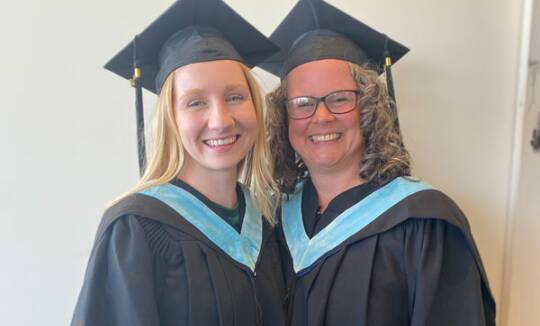
Yorkville Celebrates Graduation of 3,360 Online Students in Fredericton


2021/12/22
YU Alumnus Shannon Claggett Appointed Dean at Loyalist College

2021/06/17
Finding Her Destiny | Chantelle Caissie’s Transformational Master of Education Story